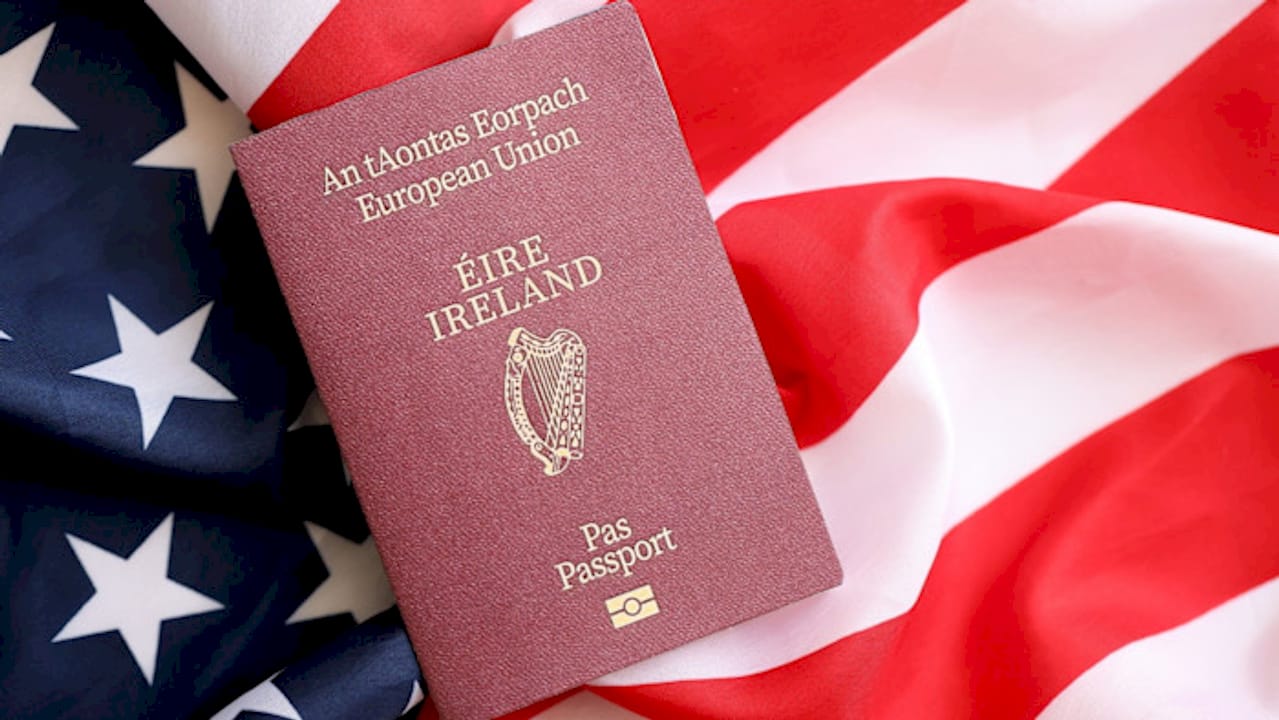
What you need to know about applying for Irish dual citizenship via the Foreign Births Register
Applying for Irish dual citizenship through the Foreign Births Register (FBR) means claiming Irsh citizenship by descent, known legally as jus sanguinis (citizenship through blood), by proving your lineage to an Irish national through documented birth records. You are not technically applying for “dual citizenship” as a status. What you actually apply for is citizenship, and dual status follows automatically since you already hold another citizenship.
Here is what the process typically involves:
- Eligibility confirmation: Verify that your ancestry qualifies under Ireland’s descent laws.
- Document gathering: Collect certified foreign birth certificates, marriage certificates, and any other required documents.
- Application submission: File your application.
- Timeline: Ireland’s Foreign Birth Registration currently takes about 12-18 months, processed strictly in date order. Timelines vary widely depending on case complexity.
- Fees: State-level fees for U.S.-based birth and marriage certificates vary. The fee for applying with the FBR is 278 euros.
- Legal status: The U.S. Department of State confirms that U.S. law does not require you to choose between citizenships, but dual nationals owe allegiance to both countries and must use a U.S. passport to enter and exit the United States.
How to confirm your eligibility for Irish citizenship by descent
There are two main paths to Irish citizenship by descent. Confirming which one applies to you comes down to when your Irish ancestor was born. If you have a parent or grandparent who was born on the island of Ireland, you’re very likely eligible – a grandparent’s Irish birth allows you to claim citizenship through the Foreign Births Register (FBR). Start by gathering the key documents that trace the line back to that ancestor: their Irish birth certificate, plus the birth, marriage, and (where relevant) death certificates connecting each generation down to you. Those vital records are the backbone of any application, so it’s worth confirming early that you can locate certified copies of each one.
If your Irish connection is a great-grandparent or further back, eligibility depends on whether the parent who links you to that ancestor was themselves registered on the Foreign Births Register before you were born.
Irish citizenship can pass down indefinitely through the generations, but only if each link in the chain registers in time. The best way to get certainty is to map out your family tree generation by generation and check that each required registration or birth record exists. Once you’ve confirmed the line and gathered your documents, you can apply through the FBR via Ireland’s official Foreign Births Register portal.
Step-by-step process for applying
The Irish dual citizenship application process follows a logical sequence, though the paperwork demands at each stage can be significant.
1. Confirm your eligibility. Establish which Irish ancestor connects you, e.g. a parent or grandparent born in Ireland qualifies you directly, while a great-grandparent or beyond requires that the linking parent was registered on the FBR before your birth.
2. Gather your supporting documents. Collect certified vital records tracing the line back to your Irish-born ancestor: their birth certificate, plus the birth, marriage, and death certificates connecting each generation down to you. You’ll also need proof of your current identity and address, and passport-style photos witnessed per the FBR guidelines.
3. Complete the online application and pay the fee. Register and fill out your application through Ireland’s official Foreign Births Register portal. Once submitted online, you’ll upload or mail in your certified documents and pay the registration fee (currently €278 for an adult).
4. Submit, then wait for processing and your certificate. Send your certified originals as instructed and wait for review. Processing times can be lengthy, so be patient. Once approved, you’ll be entered on the Foreign Births Register and receive your certificate, which then lets you apply for an Irish passport as a dual citizen.
Common challenges and legal considerations for dual nationals
Missing or inconsistent records are the most common reason applications stall. Spelling variations in surnames across generations, records destroyed during wartime, and ancestors who never registered births with their home country’s consulate all create gaps that require additional evidence to bridge.
Authentication errors are a close second. Foreign countries have specific standards for what constitutes an acceptable document. A birth certificate from a local registrar may be rejected if local law requires one issued by the national authority on security paper. Getting this wrong means starting the document acquisition process over.
Pro Tip: Keep a master checklist of every document’s required format, issuing authority, and authentication standard for your target country before you request anything. One mismatched document can delay your application by months.
On the legal side, U.S. dual nationals carry real obligations. The U.S. Department of State is clear: dual nationals owe allegiance to both countries, must comply with both countries’ laws, and may face conflicting legal obligations. U.S. dual nationals also face limits on U.S. consular protection when they are in the country of their other nationality. Passport use matters too: you must enter and exit the U.S. on your U.S. passport, while the other country may require you to use its passport for travel to and from that country.
How renouncing or retaining your current citizenship affects your application
Retaining your U.S. citizenship while acquiring a foreign one is straightforward under U.S. law. The U.S. Department of State confirms that U.S. citizens may naturalize in a foreign country without any risk to their U.S. citizenship, and U.S. law does not require choosing one nationality over another.
The more complex question runs in the other direction: what does the target country require? Some countries, particularly outside Europe, do not permit dual nationality and will require you to renounce your U.S. citizenship as a condition of naturalization. Others allow dual status freely. European nations like Ireland, Italy, and Portugal generally permit dual nationality, which is a key reason they attract so many U.S. applicants with ancestral ties. Confirm the specific policy with the target country’s embassy before proceeding, since renouncing U.S. citizenship is an irreversible legal act with significant consequences.
If you already hold citizenship in a third country, check whether that country’s laws are affected by acquiring a fourth nationality. Some countries automatically revoke citizenship when a national voluntarily acquires another. The countries offering citizenship by descent vary significantly on this point, and the rules change periodically.
Roots Recovered, LLC makes the citizenship by descent process manageable
Citizenship by descent applications are document-intensive, country-specific, and unforgiving of procedural errors. Roots Recovered, LLC specializes in exactly this process, offering personalized consulting from eligibility assessment through application submission.
What sets Roots Recovered, LLC apart is direct experience with European consulates and a structured approach to document acquisition, authentication, and timeline management. Rather than leaving you to interpret conflicting guidance from multiple government websites, their team maps your specific lineage, identifies the right documentation for your target country, and flags potential chain-of-citizenship issues before they become rejections.
- Personalized eligibility review based on your family tree and target country’s current rules
- Document acquisition support, including guidance on locating district-level foreign birth records
- Apostille and authentication coordination
- Application tracking and consulate query response support
- Transparent pricing with no hidden fees
Start with a clear picture of what you qualify for: explore EU citizenship by descent and see how Roots Recovered, LLC can support your path to a second passport.