Uncategorized
Irish Citizenship by Descent: How to Get an Irish Passport Through a Grandparent
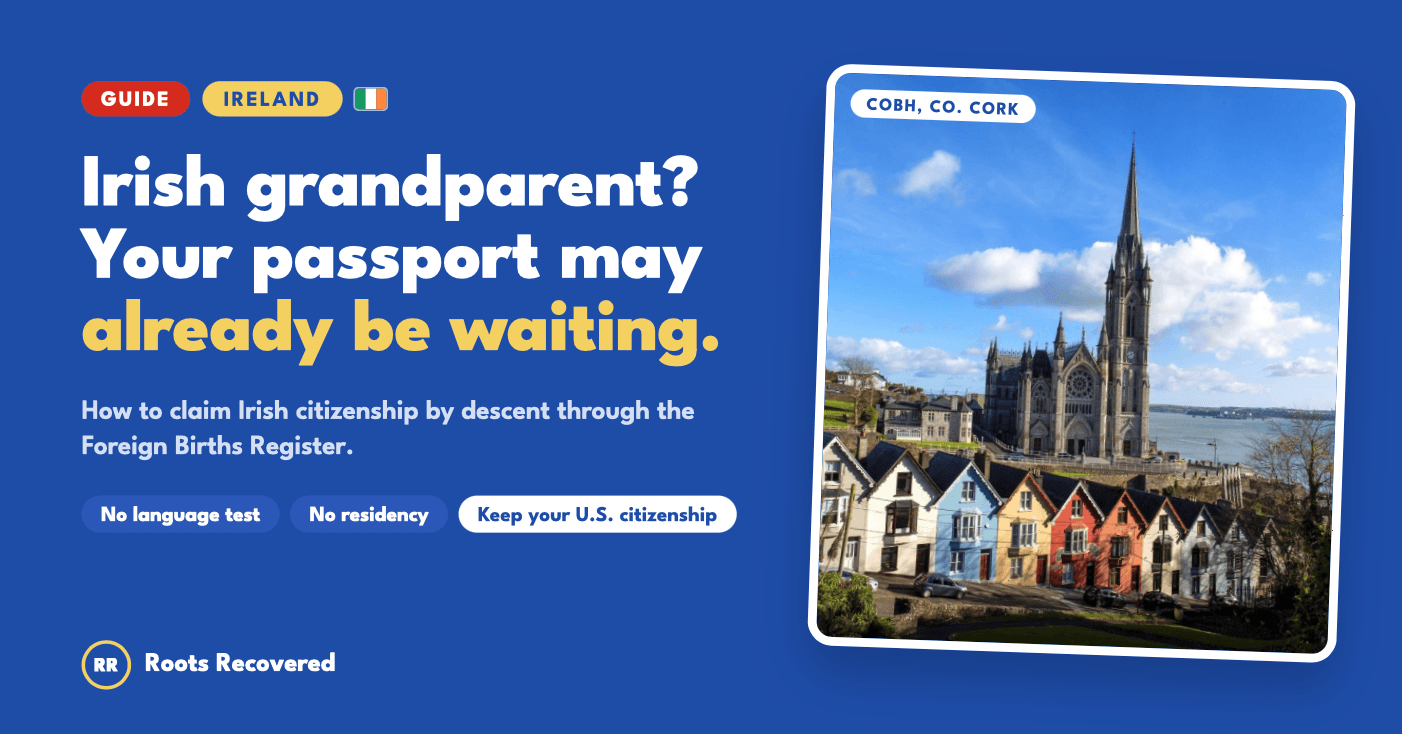
If one of your grandparents was born in Ireland, you may already be an Irish citizen who simply hasn’t been registered yet. Irish citizenship by descent is one of the most accessible routes to a second passport for Americans (and, honestly, it’s one of the best because it gives you access to both the EU and the UK). There is no language test, no residency requirement, and no need to move.
This guide covers who qualifies, how the process works, what it costs and how long it takes. It also tells you what to know before you apply.
Who Qualifies for Irish Citizenship by Descent?
Ireland grants citizenship based on family connection, not just birthplace. You may qualify if:
- A parent was born in Ireland. You are automatically an Irish citizen, and you can register your birth in the Foreign Births Register (FBR) to get proof of it.
- A grandparent was born in Ireland. You are entitled to Irish citizenship, but you must register in the Foreign Births Register to claim it.
- A great-grandparent was born in Ireland. You may qualify only if your parent registered in the FBR before you were born. If they didn’t, this route is generally closed unless you meet the criteria for Irish Citizenship by Association, which is a long and difficult road (and which we’ll cover in a future blog post).
“Ireland” here means the whole island of Ireland. A grandparent born in Northern Ireland (for example, Belfast or Derry) counts, and so does one born in the Republic.
Your grandparent also doesn’t need to have lived in Ireland for any length of time. Being born there is what counts.
A note on “automatic” citizenship
Many people are surprised to learn that with an Irish-born parent or grandparent, you may legally be an Irish citizen already. Registration doesn’t grant citizenship. It is the official recognition that you hold citizenship, and it is what lets you apply for an Irish passport.
Why Irish Citizenship Is Worth Claiming
- A second, powerful passport. An Irish passport offers visa-free travel to a large number of destinations worldwide.
- EU freedom of movement. Live, work, study, or retire in any of the 27 EU member states without a visa or work permit.
- The UK and Ireland. Irish citizens can live and work in the UK under the Common Travel Area.
- Dual citizenship is allowed. The U.S. and Ireland both permit it, so you get to keep your American citizenship.
- Passing it to your children. Children born after you register can generally claim Irish citizenship through you. If they register before they have children, it can pass on again (and again, and again, as long as each generation registers before having children).
How the Foreign Births Register Process Works
For most Americans claiming through a grandparent, the steps look like this:
- Confirm your Irish ancestor and the family line. Identify your Irish-born grandparent and confirm the line connecting them to you through your parent.
- Gather your documents. You will need civil records proving each link in the chain (see the checklist below).
- Submit the online application. Applications go through the Irish Department of Foreign Affairs (DFA) online portal. You then mail your original supporting documents.
- Wait for review. The DFA reviews your file and may request additional records.
- Receive your FBR certificate. Once approved, you are entered into the Foreign Births Register and receive a certificate of registration.
- Apply for your Irish passport. With your certificate, you can apply for your first Irish passport.
Documents You Will Need
Document errors are the most common reason applications are delayed. A typical grandparent-route file includes:
- Your grandparent’s Irish birth certificate
- Your grandparent’s marriage certificate, if applicable
- Your grandparent’s death certificate, if applicable
- Your parent’s birth certificate, showing your grandparent as a parent
- Your parent’s marriage certificate
- Your own birth certificate
- Photo ID and proof of address
- A witnessed or certified copy of your identity documents
Names are very important because spelling variations, informal name changes or name changes upon naturalization, and missing middle names are common in older records. If your documents don’t match, you may need supporting evidence or corrections before filing.
The DFA publishes the current document and format requirements, which change from time to time, so verify them before you submit.
How Much Does It Cost and How Long Does It Take?
As a starting point:
- Government fee: about €278 for adults and about €153 for children under 18, paid online with your application.
- Records: the cost of ordering certified copies of vital records adds to the total.
- Timeline: the DFA’s published processing estimates have ranged from roughly 9 to 18 months for complete applications. They vary from time to time given their workload. Incomplete files take longer, and demand has risen sharply in recent years.
Common Mistakes That Slow Down Applications
- Starting with the wrong line of descent. Not every Irish ancestor leads to a valid claim, so confirm your route first.
- Mismatched names and dates across birth, marriage, and death records.
- Missing or incorrect certificates, such as a record that is not the right type or format.
- Great-grandparent claims without a registered parent. This is the most common dead end.
- Sending incomplete originals. The DFA works from the documents you provide, so gaps mean delays.
Do I Need to Live in Ireland?
No. You do not need to live in Ireland, speak Irish, or visit before applying. Everything can be handled from the U.S.
Is Irish Dual Citizenship Right for You?
For most people with Irish roots, the benefits far outweigh the costs: travel, work and study options in Europe, and a legacy to pass on. A few things worth knowing:
- U.S. tax filing doesn’t change. As a U.S. citizen you file U.S. taxes regardless of where you live. Holding a second citizenship can create foreign-account reporting duties if you open accounts abroad, so read our guide to FBAR and dual-citizenship tax obligations before you do.
- Military or public service roles. If you hold or are seeking a security clearance, ask your security officer about holding a second passport.
Let Roots Recovered Handle the Paperwork
Researching records, ordering certificates, and getting every detail exactly right can feel overwhelming. Roots Recovered was the first American firm to focus exclusively on citizenship by descent, and everyone who touches your file is a dual citizen who has been through the process.
We can:
- Check your eligibility and confirm the right line of descent
- Locate and order vital records
- Prepare, review, and file your Foreign Births Register application
- Follow your case through to your certificate and passport
Ready to find out if you qualify? Book a free 30-minute eligibility review, or read our full Irish citizenship by descent requirements.
Frequently Asked Questions
Can I get Irish citizenship if my great-grandparent was Irish? Only if your parent was registered in the Foreign Births Register before you were born. Otherwise this route is generally not available.
Do I have to give up U.S. citizenship? No. The U.S. and Ireland both allow dual citizenship.
Does a grandparent born in Northern Ireland count? Yes. Anyone born on the island of Ireland counts, including Northern Ireland.
How long does the Foreign Births Register take? Plan for roughly 9 to 12 months once your application is complete, and longer if records are missing.
Can my children get Irish citizenship? Children born after you register can generally claim citizenship through you. Register before they are born where possible.
Do I need a lawyer? No, but many families hire experts to avoid costly delays caused by incorrect or mismatched documents.