Apostilles and Notarizations
Apostille vs. Notarization: Which One Your Documents Need
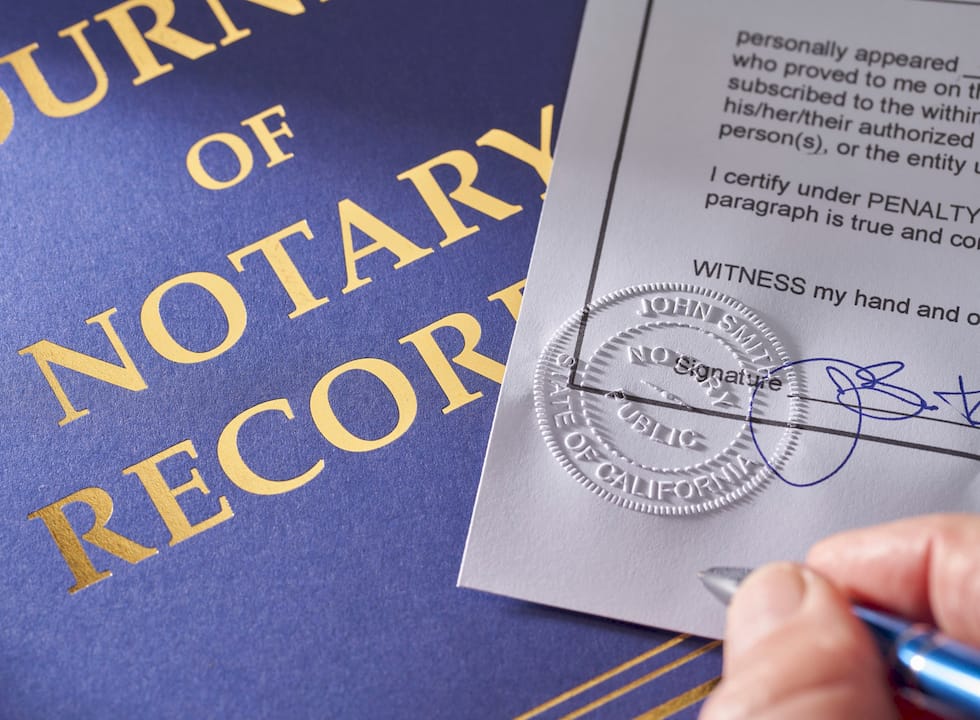
Notarization verifies who signed a document; an apostille authenticates that notarization (or a public document) so foreign authorities in other Hague Convention countries will accept it. The usual sequence for most documents is: sign in front of a notary first, then send the notarized document to the correct government office for the apostille. Some documents, like certified birth certificates, skip notarization entirely and go straight to apostille.
Here’s the quick version, so you can figure out your path before reading further:
- Staying in the U.S.? You need notarization only. No apostille required.
- Sending a document to a country that belongs to the Hague Apostille Convention? You need an apostille, and often notarization first.
- Sending a document to a country that is not a Hague member? Skip the apostille. You’ll need consular legalization instead, which is a different (and slower) process.
The U.S. Department of State typically processes federal apostille requests in about 10 to 12 business days, though state-level offices often move faster. If you’re already unsure which lane applies to your document, that uncertainty is exactly what causes the rejections and delays covered later in this guide.
TL;DR:
- Notarization verifies the signer’s identity and willingness but does not confirm the document’s content or legality, while an apostille authenticates the notary’s signature and seal.
- Federal documents require processing through the U.S. Department of State, whereas state-issued documents go to the respective Secretary of State’s office.
- An apostille certifies that the signature, capacity, and seal are genuine, but it does not verify the accuracy or truthfulness of the document itself.
- For countries outside the Hague Apostille Convention, documents need to undergo consular legalization, which is a slower process than obtaining an apostille.
- Mistakes such as submitting the wrong version of a document, incorrect notarial wording, or sending to the wrong office are common causes of rejection and can be avoided with proper verification before submission.
Table of Contents
- Apostille vs Notarization: What Each One Actually Does
- What Notarization Covers and Where It Stops
- Apostille and the Hague Convention: What It Actually Certifies
- Notarization vs Apostille: A Side-by-Side Look
- Who Actually Issues an Apostille: State vs. Federal
- How to Get a Document Notarized and Apostilled: Step by Step
- Document-by-Document Rules Worth Knowing
- Why Apostille Requests Get Rejected (And How to Avoid It)
- Real-World Scenarios: Matching the Process to Your Situation
- Getting This Right the First Time
- Key Takeaways
- Where to Verify Current Requirements
- Sources
Apostille vs Notarization: What Each One Actually Does
People often use these terms interchangeably, and that’s where the confusion starts. Notarization and an apostille solve two completely different problems, even though one frequently depends on the other.
Notarization is a state-level act performed by a commissioned notary public. The notary confirms your identity, watches you sign (or acknowledge a signature), and applies a seal and signature to a notarial certificate. That’s it. A notary is not verifying that your document is true, legal, or accurate. They’re verifying that the person who claims to have signed it actually did, willingly, in their presence.
An apostille is a certificate issued by a government authority, either a state Secretary of State or the U.S. Department of State for federal documents, confirming that a notary’s (or other official’s) signature and seal are genuine. It does not evaluate whether the underlying document says anything true. It authenticates the authenticator.
Think of it this way: notarization proves the signer showed up. An apostille proves the notary who witnessed that signing is really a notary. Neither one checks whether the content of your document is correct, and that distinction trips up a lot of first-time filers who assume an apostille somehow validates the substance of what’s written.
- Notarization happens locally, often at a bank, UPS Store, law office, or mobile notary visit.
- An apostille happens at a state or federal office, sometimes by mail, sometimes in person, and takes longer.
- One is a signature verification. The other is a government stamp confirming that verification was legitimate.
What Notarization Covers and Where It Stops
A notary public performs what’s legally called a “notarial act.” The two most common types are an acknowledgment, where you confirm you signed the document voluntarily, and a jurat, where you swear or affirm the contents are true under penalty of perjury. Both require you to appear in person (in most states) with valid photo ID.
Here’s what a notary actually checks during the appointment:
- Confirms your identity against a government-issued ID.
- Verifies you’re signing willingly, not under duress.
- Watches you sign, or has you acknowledge a prior signature.
- Records the transaction in a notary journal (required in many states).
- Applies an official seal and completes the notarial certificate wording.
That last part matters more than people expect. Every state has its own required certificate language, and a notary who uses the wrong wording, or leaves it out entirely, creates the single most common reason a document gets bounced back later. The National Notary Association is the standard reference for notarial practice, and notaries themselves cannot issue apostilles. That authority sits with a separate government office entirely.
Notarization is governed entirely by state law, which is why a notarial certificate that works in Ohio might need different phrasing in California. And critically: notarization by itself carries zero weight outside U.S. borders. A notarized power of attorney is legally meaningless to a foreign registry office unless something else, usually an apostille, tells that office the notary was real.
Apostille and the Hague Convention: What It Actually Certifies
An apostille exists because of a 1961 international treaty called the Hague Apostille Convention, which the United States joined in 1981. Before that treaty, sending a document abroad meant a multi-step chain of certifications, often involving the issuing state, the U.S. State Department, and the destination country’s embassy, sometimes taking months. The apostille replaced that entire chain with a single certificate.
Here’s the part that surprises most people: an apostille certifies exactly three things.
- The signature on the document is genuine.
- The capacity in which the signer acted (notary, court clerk, government official) is legitimate.
- The identity of any seal or stamp attached to the document is authentic.
It does not certify that the document’s content is true, accurate, or legally sound. A birth certificate with a typo still gets an apostille if the seal and signature check out. This is a point worth sitting with, because assuming an apostille “approves” your document is one of the more common misunderstandings that leads to confusion later, when the receiving country’s registrar starts asking substantive questions the apostille was never designed to answer.
The practical upside is enormous for anyone dealing with international paperwork. Once a document carries an apostille from a member country, any other member country must accept it without additional embassy authentication. More than 120 countries and territories participate in the convention, spanning most of Europe, much of Latin America, and a growing list of Asian and African nations. If you’re pursuing citizenship by descent somewhere in that network, this single certificate often stands between you and a completed application.
Where a destination country is not a Hague member, the apostille process doesn’t apply at all. You’d need consular legalization instead, a longer process involving the destination country’s embassy or consulate directly.
Notarization vs Apostille: A Side-by-Side Look
Once you understand what each process actually verifies, the practical differences become easier to sort out. Here’s how they stack up across the factors that matter most when you’re preparing documents.
| Factor | Notarization | Apostille |
|---|---|---|
| What it verifies | Signer’s identity and willingness | Authenticity of the notary’s or official’s signature/seal |
| Who issues it | A commissioned notary public | State Secretary of State or U.S. Department of State |
| Geographic recognition | Valid only within the issuing state, generally | Recognized in all Hague Convention member countries |
| What it does NOT confirm | Truth or accuracy of document content | Truth or accuracy of document content |
| Typical turnaround | Same day, often within an hour | Days to a few weeks depending on office |
| Typical cost driver | Notary’s per-signature fee (varies by state) | State or federal processing fee plus mailing |
The dependency relationship is the part worth remembering: an apostille usually authenticates a notarization that already happened, not the underlying document itself. That’s why the sequence matters. Skip notarization when it’s required, and the apostille office will reject your submission outright, because there’s nothing valid for them to authenticate.
There’s an important exception, though. Certified vital records, birth certificates, marriage certificates, and death certificates issued directly by a state’s vital records office already carry an official seal from that office. They don’t need notarization first. They go straight to the apostille stage because the “signature and seal” the apostille verifies belongs to the registrar, not a notary.
Who Actually Issues an Apostille: State vs. Federal
This is where a lot of people send their documents to the wrong place and lose a week or two waiting for a rejection letter. The rule comes down to where the document originated.
State-issued documents go through that state’s Secretary of State office (or equivalent authentication office). This covers most of what individuals deal with regularly:
- Birth, marriage, and death certificates
- State court documents
- Documents notarized by a notary commissioned in that state
- Diplomas and transcripts from state institutions
Federal documents go through the U.S. Department of State’s Office of Authentications in Washington, D.C. This includes:
- FBI background checks and identity history summaries
- Documents issued by federal agencies (USDA, IRS, federal courts)
- Documents notarized by military notaries overseas in certain cases
Mailing an FBI background check to a state office, or a state-issued birth certificate to the federal office, is one of the most frequent and entirely avoidable mistakes people make. Each office only has authority over documents within its own jurisdiction, and they will not forward misdirected paperwork for you.
Processing times differ meaningfully between the two tracks. The Department of State’s own guidance puts federal apostille turnaround at roughly 10 to 12 business days under normal conditions, not counting mailing time in either direction. State offices vary widely: some process apostilles same-day over the counter, while others run several weeks behind during peak filing seasons (often spring and late summer, when study-abroad and immigration paperwork spikes). Fees follow a similar split: state offices typically charge somewhere in the range of a few dollars to around $20 per document, while the federal office sets its own separate fee schedule, so always confirm current pricing directly with the issuing office rather than relying on older guides.
How to Get a Document Notarized and Apostilled: Step by Step
Here’s the practical workflow, in the order you should actually do it.
- Confirm your destination country’s status. Check whether the receiving country is a Hague Convention member. If it isn’t, stop here and look into consular legalization instead, since an apostille won’t be recognized there.
- Ask the receiving office exactly what they require. A foreign consulate, university, or registrar often has specific expectations: certified copy vs. original, translation requirements, or a particular notarial wording. Get this in writing before you spend money on notarization.
- Determine whether notarization is even needed. Certified vital records typically skip this step. Affidavits, powers of attorney, and most personal statements need it.
- Get the document notarized correctly. Bring valid photo ID, sign in front of the notary (don’t sign beforehand), and confirm the notarial certificate uses your state’s required wording.
- Identify the correct apostille office. State document, state Secretary of State. Federal document, U.S. Department of State Office of Authentications.
- Submit your request. Most offices accept mail-in requests with a cover letter, the document, payment, and a prepaid return envelope. Some state offices offer walk-in or expedited service for an added fee.
- Track your turnaround expectations. Budget for 10 to 12 business days for federal requests, and check your specific state’s current estimate, since these shift with volume.
- Confirm receipt and check the certificate. When your document returns, verify the apostille is physically attached (usually stapled or affixed to the back) and lists the correct document description.
Pro Tip: Always use a trackable, prepaid return envelope (USPS Priority with tracking or a courier service) when mailing to a state or federal apostille office. Offices process thousands of requests, and an untracked return envelope is the single easiest way to lose weeks chasing down a document that’s actually sitting in a bin somewhere.
If you’re preparing documents for a citizenship-by-descent filing rather than a one-off apostille, the workflow above tends to repeat itself across multiple documents, birth certificates, marriage records, affidavits, each with its own notarization and apostille path. Roots Recovered, LLC’s services exist specifically to manage that repetition so you’re not solving the same puzzle five separate times.
Document-by-Document Rules Worth Knowing
Not every document type follows the same path, and guessing wrong wastes real time. Here’s how the common categories break down.
Vital records (birth, marriage, death certificates): request a certified copy directly from the state’s vital records office. These typically go straight to apostille, no notarization needed, because the registrar’s own seal is what gets authenticated. A photocopy of an old certificate, even a “certified” looking one from years ago, is frequently rejected if it’s not a current certified copy from the issuing office.
Powers of attorney: these almost always require notarization first. A POA is a private legal instrument, not a government record, so there’s no official seal for the apostille office to verify until a notary creates one.
Corporate documents (articles of incorporation, board resolutions, certificates of good standing): these often need certification by the state’s corporate filings division, sometimes in addition to notarization, before the apostille office will process them. Check with your Secretary of State’s business division for the exact sequence, since requirements vary by state.
Federal records (FBI identity history summaries, IRS documents): these bypass state offices entirely and go to the U.S. Department of State. Do not notarize a federal document unless the issuing agency’s own instructions specifically call for it; some federal apostille pathways require a certified copy rather than a notarized original, and altering the document form can invalidate the request.
Translations: if your destination country requires a translated version, that translation sometimes needs its own notarized certification of accuracy from the translator, separate from any notarization on the original document. Confirm this with the receiving office, since requirements vary widely by country and by institution. Notarized affidavits come up constantly in citizenship filings for exactly this reason.
Why Apostille Requests Get Rejected (And How to Avoid It)
Most rejections trace back to a handful of repeatable mistakes, and nearly all of them are avoidable with a five-minute check before you submit anything.
- Wrong document version. Sending a photocopy when a certified copy or original was required is probably the single most common issue, according to practical guidance from PandaDoc Notary.
- Missing or incorrect notarial wording. If the notary’s certificate doesn’t match your state’s required language, the apostille office may bounce it before ever reaching the review stage.
- Sending to the wrong office. Federal documents mailed to a state office, or vice versa, get returned unprocessed, costing you the mailing time in both directions.
- Expired or outdated certified copies. Some receiving countries only accept vital records issued within the last 6 to 12 months; check the destination’s specific rule before ordering copies.
- Destination isn’t a Hague member. If you request an apostille for a country that never joined the convention, the certificate will mean nothing there. You need consular legalization instead.
- Missing payment or return envelope. Simple, but common enough to be listed by name in PandaDoc’s rejection guidance: incomplete submissions sit in limbo until someone flags the gap.
Pro Tip: Before you mail anything, call or email the receiving office abroad and ask them, specifically, whether they require an apostille, a notarized copy, or both. Requirements shift by country and even by individual consulate, and a two-minute confirmation email can save you a month of resubmission.
Real-World Scenarios: Matching the Process to Your Situation
-
Studying abroad. If you’re sending diplomas or transcripts to a university in a Hague member country, expect to apostille the school’s certified transcript, sometimes after notarizing an accompanying affidavit of authenticity. Universities in non-Hague countries will instead direct you toward consular legalization.
-
Getting married overseas. Most countries require a certified copy of your birth certificate, an apostille on that certificate, and sometimes a notarized affidavit of single status. Start this process early. Vital records offices and apostille offices both have queues that don’t move faster because your wedding date is approaching.
-
Citizenship by descent applications. This is where the two processes overlap the most. You’ll typically need apostilled vital records (birth and marriage certificates from your ancestral line) alongside notarized affidavits explaining name discrepancies or missing records. Consulates reviewing citizenship-by-descent filings are often strict about apostille currency and correct sequencing, which is exactly why professional review before submission tends to save applicants months of back-and-forth.
-
Employment or business filings abroad. Sending corporate documents to open a foreign subsidiary or contracts to an overseas employer often means notarizing signature pages first, then apostilling the certified set, following whatever sequence the receiving country’s business registry specifies.
Getting This Right the First Time
Notarization and apostilles solve different problems, and the safest approach is confirming which one (or both) your destination actually requires before you spend money or time on either. When the process involves multiple ancestral documents across different offices and countries, the coordination burden multiplies fast. That’s precisely the kind of logistics Roots Recovered, LLC handles for clients pursuing citizenship by descent, tracking which vital records need apostilles, which affidavits need notarization, and which consulate has its own quirks about document currency and format.
If you’re staring down a stack of birth certificates, marriage records, and affidavits for a European or Canadian citizenship claim, a citizenship eligibility assessment is the fastest way to find out exactly which documents you’ll need and in what order to process them, before you spend weeks guessing at state versus federal offices on your own.
Key Takeaways
The correct process depends entirely on your document’s origin and destination: domestic use needs only notarization, while international use in a Hague Convention country needs an apostille, usually after notarization.
| Point | Details |
|---|---|
| Know the sequence | Notarize first when required, then apostille; certified vital records often skip notarization entirely. |
| Match the issuing office | State documents go to the state Secretary of State; federal documents go to the U.S. Department of State. |
| Budget realistic time | Federal apostille processing runs about 10 to 12 business days, not counting mail transit. |
| Check Hague membership first | Non-member countries require consular legalization instead of an apostille. |
| Avoid the top rejection causes | Confirm certified copy vs. original, correct notarial wording, and the right office before submitting. |
Where to Verify Current Requirements
Requirements and fees shift periodically, so confirm details directly with official sources before you submit anything:
- U.S. Department of State: apostille requirements for federal document processing, fees, and mailing instructions.
- The NASS Apostille handbook for state-by-state authentication office details.
- National Notary Association guidance on notarial acts and their role in the apostille process.
- MyNotary’s overview of apostilles for a plain-language rundown of how the concept works internationally.
Always confirm the receiving authority’s exact requirement, document version, translation needs, and validity window, before you begin, since a five-minute check up front beats a rejected package weeks later.