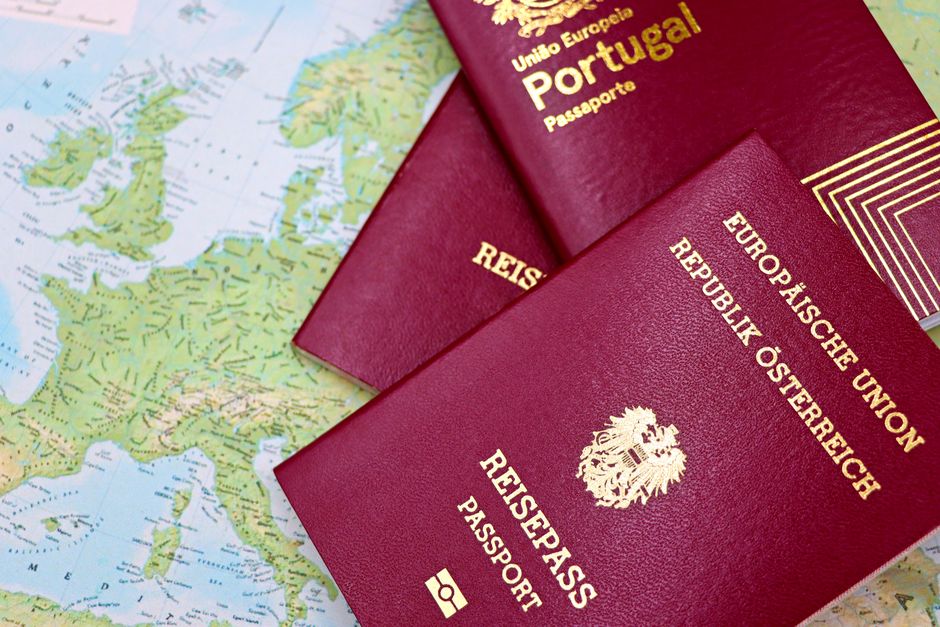
More than ever, Americans are looking for a plan B, a way to reconnect with their heritage, or to secure global mobility for themselves and their families. A 2025 Harris Poll found that 42 percent of Americans have considered moving abroad, and among Gen Z and Millennials that number spikes to 66 percent. If you are wondering what countries can offer you citizenship by descent, you are not alone. The answer is more expansive than most people realize: more than 50 countries worldwide offer some form of citizenship by descent, rooted in the legal principle of jure sanguinis, or Latin for “right of blood.”
This guide covers every major country offering citizenship by descent, explains how far back you can claim, and gives you the practical steps to start your journey in 2026. At Roots Recovered, we help people just like you turn family history into a second passport, and we are here to walk you through every stage of the process.
Table of Contents
- What Is Citizenship by Descent? (The Legal Foundation)
- Why Pursue Citizenship by Descent in 2026?
- The Best Countries for Citizenship by Descent (By Continent)
- How Far Back Can You Claim? (Generational Limits Comparison)
- The Application Process: 5 Steps to Your Second Passport
- Common Pitfalls and How to Avoid Them
- Is Citizenship by Descent Right for You? (How to Get Started)
- Frequently Asked Questions (FAQ)
- Start Your Citizenship by Descent Journey in 2026
What Is Citizenship by Descent? (The Legal Foundation)
Citizenship by descent rests on a legal principle called jure sanguinis, Latin for “right of blood.” Under this doctrine, citizenship is inherited through bloodlines rather than determined by the location of your birth. This stands in direct contrast to jus soli, or “right of soil,” which grants citizenship to anyone born within a country’s borders regardless of their parents’ nationality.
The United States practices jus soli as its primary citizenship rule. If you were born on American soil, you are an American citizen, full stop. Most of Europe and many nations across Asia, and Africa, however, follow jure sanguinis. This means millions of Americans with immigrant ancestors may already qualify for a second passport without even knowing it.

It is important to distinguish citizenship by descent from other pathways. Naturalization requires years of residency, language exams, and civic tests. Marriage-based citizenship depends on a spousal relationship. Investment-based citizenship demands significant capital. Citizenship by descent, by contrast, is a birthright. If you can prove your lineage to a qualifying ancestor, the citizenship is already yours, you are simply having it recognized.
Many countries extend this right well beyond parents. Grandparents, great-grandparents, and in some cases even more distant ancestors can serve as the anchor for a citizenship claim. The key variable is whether the chain of citizenship remained unbroken across generations, a concept we will explore in detail throughout this guide.
Why Pursue Citizenship by Descent in 2026?
Perhaps the better question is… why not? The motivations for pursuing a second passport are as varied as the families we work with, but several themes emerge consistently.
Global mobility tops the list for many applicants. A second passport, particularly one from a European Union member state, unlocks visa-free or visa-on-arrival access to more than 170 countries. For Americans accustomed to a powerful passport, this may not seem transformative, but for those who travel frequently or plan to live abroad, the difference is tangible.

EU freedom of movement is perhaps the most valuable benefit. A single EU passport grants the right to live, work, and study in any of the 27 EU member states, plus Iceland, Liechtenstein, Norway, and Switzerland. You can open a business in Berlin, enroll in a university in Barcelona, or retire to the Portuguese coast, all with one document. If you have a Canadian ancestor, Canada also opens up.
That said, heritage reconnection runs deeper than practical benefits. Many of our clients describe the process as profoundly meaningful, a way to honor grandparents and great-grandparents who crossed oceans and built new lives. Claiming citizenship by descent creates a tangible, legal link to that family story.
Additionally, security and diversification have become increasingly compelling reasons. A second passport serves as an insurance policy in an uncertain world and a backup plan that can be activated if circumstances at home shift unexpectedly. And because citizenship by descent can often be passed to your own children, you are creating a generational gift that extends far beyond your own lifetime.
The Best Countries for Citizenship by Descent (By Continent)
The landscape of citizenship by descent is vast. More than 50 countries offer some form of pathway, but the generosity of those programs varies dramatically. Below, we break down the most accessible and popular options by continent, with a focus on the details that matter most for American applicants.
Europe (The Most Generous Continent)
Europe dominates the citizenship by descent conversation for good reason. The combination of generous generational limits, EU membership benefits, and well-established application procedures makes European ancestry the most sought-after pathway.
Ireland offers a straightforward and relatively fast pathway. You qualify if one of your grandparents was born in Ireland, or if your parent was an Irish citizen at the time of your birth, even if that parent was born abroad. The Foreign Births Register process is well-documented, and processing times are among the shorter ones in Europe, typically under two years. Ireland does not require language testing, and the Irish passport provides full EU rights plus the Common Travel Area with the United Kingdom.
Poland allows claims through parents, grandparents, great-grandparents, and sometimes beyond. The key requirement is proving that your ancestor held Polish citizenship, left Poland after January 1920, and that citizenship was not lost along the way. Poland’s history of border changes and record destruction makes documentation challenging, but for those who can assemble the paper trail, the pathway is open. Language proficiency is not required for citizenship confirmation by descent.
Germany historically has not posed any generational limits but there are disqualifers such as year of emigration and year of naturalization outside Germany. What’s more, descendants of individuals who fled Nazi persecution and were stripped of their German citizenship between 1933 and 1945 have a dedicated restoration pathway. German law is precise and documentation-heavy, but for those who qualify, the result is a German passport in Europe’s largest economy.
Luxembourg poses no generational limits, depending on the gender of your ancestor and their year of birth.
Hungary offers one of the most generous generational reaches in Europe, extending to parents, grandparents, great-grandparents, and beyond. However, Hungary imposes a language requirement that catches many applicants off guard. You must demonstrate conversational proficiency in Hungarian during a consular interview. This is not a written exam, but it is a genuine test of your ability to communicate. For those willing to learn the language, the reward is an Hungarian passport with deep ancestral reach.
Portugal allows claims through a Portuguese parent or grandparent. Individuals may also “chain” their applications to great-grandparents and beyond, as long as previous ancestors get their Portuguese citizenship recognized. A separate pathway for descendants of Sephardic Jews expelled from Portugal in the 15th and 16th centuries has been available in recent years, though this program is currently under review and its future is uncertain as of 2026. Standard descent claims do not require language proficiency.
Other European options exist but with tighter restrictions. Austria limits descent claims to parents only and imposes strict rules–except for those seeking dual citizenship due to Nazi persecution, for which the line of descent is actually unlimited. Switzerland and the Netherlands similarly restrict claims to one generation. Serbia and Ukraine offer pathways for those with documented ancestry, though the processes are less standardized. The United Kingdom does not offer true citizenship by descent beyond one generation, but its Ancestry Visa provides a five-year work visa for Commonwealth citizens with a UK-born grandparent, which can lead to permanent residency and eventual citizenship.
The Americas
The Americas present a mixed picture for citizenship by descent, with some clear pathways and notable limitations.
Canada is a standout. Thanks to recent changes from Bill C-3, the pathway to citizenship by descent through a Canadian ancestor–no matter how many generations removed–is now open. In the past, applicants could only qualify if they had at least one Canadian citizen parent at the time of their birth. Now, applicants can apply for proof of Canadian citizenship if they have a Canadian parent, grandparent, great-grandparent, or beyond.
Brazil allows claims through a Brazilian parent or grandparent if your parent registers their own Brazilian citizenship first. The process is relatively straightforward, and Brazil permits dual citizenship. For those with Brazilian ancestry, this pathway provides access to a Mercosur passport with visa-free travel across much of South America.
Mexico permits claims through a Mexican parent born in Mexico. The grandparent pathway exists but requires additional documentation and consular processing. Mexican law fully recognizes dual citizenship.
Argentina, Chile, Colombia, and Peru all offer descent pathways, generally limited to parents. Each country has its own documentation requirements and processing timelines, but the principle is consistent: if your parent was a citizen at your birth, you likely qualify.
Asia, Africa, and Oceania
Outside Europe and the Americas, citizenship by descent options become more varied and often more restrictive.
The Philippines allows claims through a Filipino parent. A grandparent pathway exists but requires the parent in the intermediate generation to reclaim their Filipino citizenship first, adding a layer of complexity. Dual citizenship is permitted.
South Africa offers citizenship by descent if one parent was a South African citizen at your birth, whether by birth or by naturalization. The process is well-documented, but applicants should be aware that South Africa requires citizens to enter and exit the country on a South African passport.
Israel’s Law of Return grants citizenship to anyone with at least one Jewish grandparent, regardless of their current religious practice or affiliation. This is not strictly a descent program in the jure sanguinis sense, but it functions similarly for those with Jewish ancestry. The process is well-established, and Israel permits dual citizenship.
Australia and New Zealand generally limit citizenship by descent to one generation. An Australian or New Zealand parent who was a citizen at your birth can pass citizenship to you, but you cannot pass it to your own children if they are born outside the country.
Ghana’s Year of Return initiative has generated interest in African ancestry pathways, but it is important to understand that this program offers a right of abode and eventual naturalization, not immediate citizenship by descent. India offers the Overseas Citizen of India card, which provides many rights but stops short of full dual citizenship. South Korea permits descent claims but imposes strict rules, including potential military service obligations for male applicants.
How Far Back Can You Claim? (Generational Limits Comparison)
The single most common question we receive is how far back a claim can reach. The answer depends entirely on the country, and the differences are stark.
Ireland reaches to the grandparent generation. If your grandparent was born in Ireland, you qualify. If only your great-grandparent was born in Ireland, you do not qualify through that line unless your parent claimed Irish citizenship before your birth.
Poland reaches to the great-grandparent generation and sometimes beyond, provided the ancestor held Polish citizenship and did not lose it before the next generation was born. The complexity here lies in proving citizenship status for ancestors who lived through border changes and world wars.
Hungary reaches to the great-grandparent generation and beyond, with the language requirement serving as the primary gatekeeper for distant claims.
Slovakia allows for citizenship going back to great-grandparents and sometimes great-grandparents, if the applicant includes their minor child under the age of 14 in their application.
Germany is technically unlimited, with the Nazi persecution exception opening the door for descendants of former German citizens as well.
Most non-European countries limit claims to the parent generation only. One notable exception is Canada, with unlimited citizenship by descent.
Israel reaches to the grandparent generation through the Law of Return, a generous standard that has made Israeli citizenship accessible to many Americans with Jewish ancestry.
The Application Process: 5 Steps to Your Second Passport
Securing citizenship by descent is a methodical process that rewards patience and thoroughness. Here are the five steps that carry you from curiosity to passport.
- Step one: identify your qualifying ancestor. Trace your family tree back to the generation that connects you to the target country. This may be a parent, grandparent, or great-grandparent depending on the country’s rules. Be specific about names, dates, and places of birth, marriage, and death.
- Step two: gather vital documents. You will need birth, death, and marriage certificates for every person in the chain connecting you to your qualifying ancestor. Passports, naturalization records, census records, and ship manifests often play supporting roles. These documents must be certified copies, and some must be apostilled or translated into the target country’s language.
- Step three: prove the unbroken chain. This is the step where many applications succeed or fail. You must demonstrate that your qualifying ancestor did not naturalize in another country before the next person in the chain was born. A certificate of naturalization dated after your grandparent’s birth is gold. A certificate dated before that birth breaks the chain. If your ancestor never naturalized at all, you may need a certificate of non-existence from USCIS or a letter from the National Archives. This advice, however, is highly country-specific.
- Step four: submit your application. Depending on the country, this may happen at a consulate, an embassy, or via mail to a central authority. Some countries require in-person appointments that can be booked months or years in advance. Others accept applications by mail with no personal appearance required.
- Step five: wait for processing. Timelines vary dramatically. Ireland’s Foreign Births Register typically processes applications in 12 to 24 months. Italian consular applications can take two to four years or longer, depending on the consulate’s backlog. Hungarian simplified naturalization often moves faster once the language interview is scheduled. No two countries are alike, and no two consulates within the same country are alike either.
Common Pitfalls and How to Avoid Them
The citizenship by descent process is navigable, but it contains traps that can delay or derail an application.
Missing documents are the most frequent obstacle. Records from the late 19th and early 20th centuries were often lost to fire, flood, war, or simple neglect. You may need to request documents from foreign archives, church parishes, or regional record offices. Some records simply do not exist, and in those cases you may need affidavits or alternative evidence.
Naturalization timing is the number one reason for rejection.
Name discrepancies create friction. You may find Anglicized names. Census takers spelled phonetically. A grandfather born “Giovanni” in Sicily may appear as “John” on every American document. These discrepancies may need to be reconciled, sometimes through court orders or official name-change documentation.
Dual citizenship restrictions in your home country may apply. The United States permits dual citizenship without restriction, but countries like China, Japan, and India do not. If you hold citizenship in a country that prohibits dual nationality, acquiring a second passport may jeopardize your original citizenship.
Language requirements catch applicants off guard. Hungary requires conversational Hungarian. Romania may test basic Romanian in some consular interviews. Do not assume you are exempt. Verify the language requirement for your target country before you invest time and money in the process.
Is Citizenship by Descent Right for You? (How to Get Started)
Before you dive into document gathering, take a moment to assess whether citizenship by descent is a realistic path for you.
Do you have a parent, grandparent, or great-grandparent born in a country that offers citizenship by descent? If the answer is yes, you have a starting point. Do you have access to their vital records, or a reasonable path to obtaining them? Are you prepared for a process that may take one to four years and require patience with bureaucracies both foreign and domestic?
If you answered yes to these questions, citizenship by descent may be within reach. The process rewards diligence, but it does not require legal training or fluency in a foreign language, at least for most countries. What it requires is a methodical approach and a willingness to see the project through.
At Roots Recovered, we handle the research, document gathering, and application filing for clients pursuing citizenship by descent in Italy, Ireland, Poland, Hungary, Germany, and beyond. We know the specific requirements for each country, we understand the common pitfalls, and we have helped clients navigate the process from initial eligibility assessment to passport in hand. If you want to understand your eligibility for Italian citizenship by descent or any other pathway, we are here to help.
Ready to unlock your heritage? Contact Roots Recovered today for a free eligibility assessment. We will help you determine what countries can you get citizenship by descent based on your unique family history. Visit our contact page to start the conversation.
Frequently Asked Questions (FAQ)
Who qualifies for citizenship by descent?
Anyone with a parent, grandparent, or in some cases great-grandparent or more distant ancestor born in a country that offers citizenship by descent may qualify. The specific generational reach depends on the country’s laws. The critical factor is whether the chain of citizenship remained unbroken across generations, meaning no ancestor naturalized in another country before the next generation was born.
What is the easiest country to get citizenship by descent?
This question is hard to answer! “Easiest” depends entirely on your specific family history.
Can I get citizenship by descent through a great-grandparent?
Yes, for several countries including Italy*, Poland, Hungary, and Romania. Ireland and most other countries limit claims to the grandparent generation. Check the specific rules for the country where your great-grandparent was born.
*Up until March 27, 2025, Italy was one of the most generous European countries for dual citizenship. Now, rules to qualifying are more strict. However, the new law is being challenged at Italy’s highest courts, and the situation is in flux. The rules may revert to the less restrictive pathway, but it’s too early to tell.
Do I need to speak the language?
For Italy and Ireland, no language proficiency is required. For Hungary, yes, you must demonstrate conversational Hungarian in a consular interview. Romania may require basic Romanian in some cases. Portugal requires an A2 language exam or proof of a language course, if applying through grandparents. Verify the language requirement for your target country before proceeding.
How long does it take?
Processing times range from approximately six months to four or more years, depending on the country, the specific consulate or office handling your application, and the complexity of your case. Ireland tends to be faster. Italian consulates with heavy backlogs can take years, but you can obtain quicker recognition if you live in Italy (approximately 2-4 months).
Can I pass citizenship to my children?
In most cases, yes. Once your citizenship by descent is recognized, you can typically register your children’s births and pass the citizenship to them. However, some countries impose first-generation-born-abroad limits that may affect your children if they are born outside the country. Check the specific rules for your target country.
Start Your Citizenship by Descent Journey in 2026
A second passport is more accessible than most people think. Millions of Americans carry the legacy of immigrant ancestors whose citizenship rights survived the journey across the ocean, waiting to be claimed by the generations that followed. The process takes time and effort, but the reward is a tangible connection to your heritage and a passport that opens doors around the world.
Don’t let your family history stay in the past. Let Roots Recovered help you claim your future. Visit our contact page to schedule your free eligibility assessment and take the first step toward your second passport in 2026.