Uncategorized
AncestryDNA vs 23andMe: Which Test Fits Your Goals?
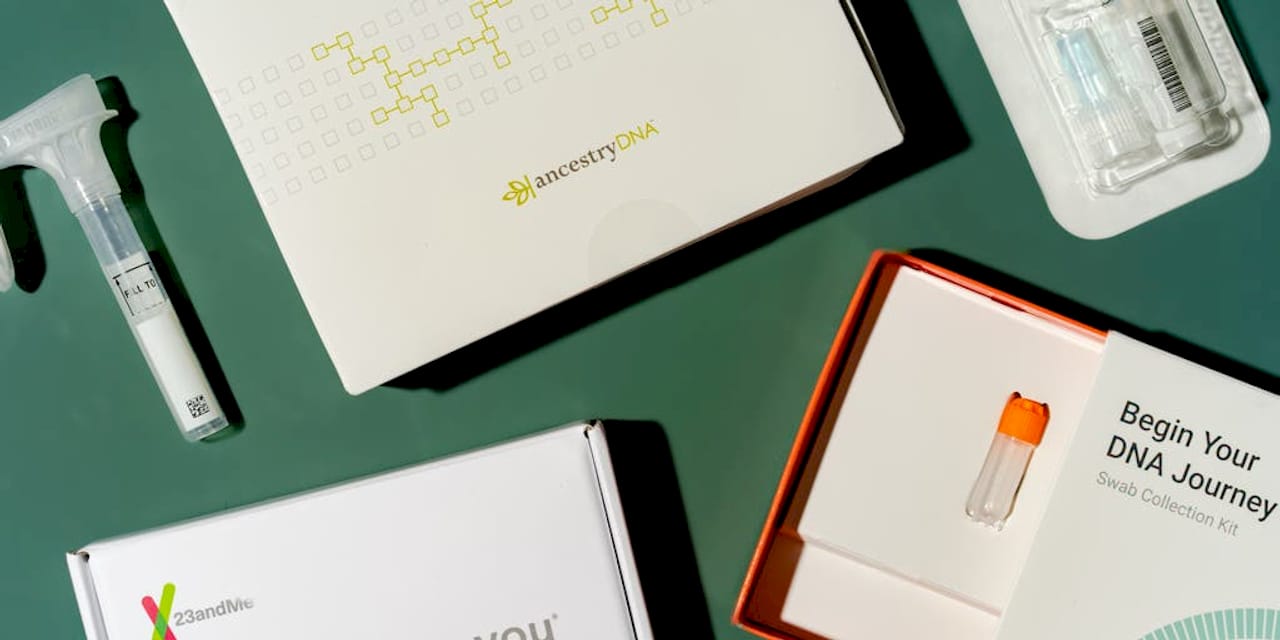
Choose AncestryDNA if building a family tree and finding living relatives is your priority. Choose 23andMe if you want FDA-authorized health reports, carrier screening, and detailed haplogroup data. That single distinction drives nearly every meaningful difference between these two services, and expert reviewers consistently land on the same conclusion: the better test depends entirely on what you plan to do with the results.
- AncestryDNA: The largest consumer DNA database available, paired with Ancestry.com’s historical records, gives genealogists more matches and more usable documentary leads than any competing platform.
- 23andMe: FDA-authorized health and carrier screening reports, plus maternal and paternal haplogroup reporting, make it the clear choice for health-conscious users and anyone tracing lineage through mitochondrial or Y-chromosome lines.
If you are also weighing whether a DNA match could support a citizenship-by-descent claim, read through to Section 10. DNA is a powerful investigative tool, but it cannot replace the certified civil records that consulates require.
Table of Contents
- How do AncestryDNA and 23andMe compare at a glance?
- How do consumer DNA tests actually work?
- How should you interpret ethnicity estimates and small percentages?
- Why does database size matter so much for genealogy?
- What should you know about privacy and data security?
- How do the prices and raw-data options compare?
- How do you choose the right DNA test for your situation?
- How DNA evidence fits into citizenship-by-descent work
- Key Takeaways
- How Roots Recovered, LLC turns DNA leads into citizenship applications
How do AncestryDNA and 23andMe compare at a glance?
Goal-based selection is the consistent verdict across independent reviews — there is no single winner. The table below maps the dimensions that matter most.
| Dimension | AncestryDNA | 23andMe |
|---|---|---|
| Best for | Genealogy and family-tree building | Health insights and haplogroup reporting |
| Database size | ~25–28 million users (largest consumer pool) | ~12–14 million users |
| Ethnicity resolution | More granular regional breakdowns in many reviews | Solid global coverage; fewer sub-regional categories |
| Health reports | Not offered | FDA-authorized health + carrier screening (higher-tier kit) |
| Haplogroups | Not reported | Maternal (mtDNA) and paternal (Y-DNA) haplogroups included |
| Raw data export | Yes (downloadable) | Yes (downloadable) |
| Privacy / law enforcement | Opt-in law-enforcement program; review settings | 2023 data breach; 2025 bankruptcy sale raised governance questions |
| Base kit price | ~$99 | ~$99 (Ancestry only); ~$229 (Health + Ancestry) |
| Records subscription | Required for full Ancestry.com record access | Not applicable |
| Turnaround time | 6–8 weeks typical | 3–5 weeks typical |
Three decision pivots:
- Genealogist: — AncestryDNA’s larger database and record integration produce more actionable matches. The subscription cost is real, but the documentary payoff is substantial.
- Health researcher: — 23andMe’s FDA-authorized reports are the only consumer option for clinically framed genetic health screening. No other major direct-to-consumer test matches that authorization level.
How do consumer DNA tests actually work?
Both AncestryDNA and 23andMe use microarray-based autosomal SNP genotyping rather than full genome sequencing. A chip reads several hundred thousand specific positions in your DNA, compares those positions to a reference panel of known populations, and produces ethnicity estimates and relative matches based on shared segments.
Key figure: Both platforms assay roughly 600,000–700,000 SNPs, according to technical comparisons of the two services. The human genome contains approximately 3 billion base pairs, so the chip reads well under 1% of your total DNA. That is why results are probabilistic estimates, not clinical diagnoses.
The practical implications:
- Reference panels shape everything. Each company maintains its own database of people with known ancestry from specific regions. The larger and more geographically diverse that reference set, the more precisely the algorithm can assign your DNA segments to a region.
- Algorithms differ. Even identical raw SNP data can produce different ethnicity percentages when run through different reference panels and assignment models. This is the main reason your AncestryDNA and 23andMe results may not match exactly.
- Haplogroup reporting requires Y-DNA and mtDNA analysis. Autosomal SNP chips can extract haplogroup information from the mitochondrial and Y-chromosome regions included on the array. 23andMe reports both maternal (mtDNA) and paternal (Y-DNA) haplogroups as part of its standard output. AncestryDNA focuses on autosomal matching and does not provide haplogroup assignments, which matters for anyone tracing a single ancestral line deep into prehistory or for genealogical societies like the International Society of Genetic Genealogy (ISOGG) that use haplogroups for lineage projects.
How should you interpret ethnicity estimates and small percentages?
A result showing 1% Scandinavian or 2% Ashkenazi Jewish is a low-confidence signal. Treat it as a clue pointing toward a distant ancestor, not as a definitive statement about your heritage. Both companies apply confidence thresholds, and small percentages often sit right at or just above the detection floor.
Ancestry tends to report more granular regional breakdowns than 23andMe in many independent reviews, which can make results feel more specific. That granularity is a function of Ancestry’s larger reference panel for certain regions, particularly within Europe and the British Isles. For populations that are underrepresented in both reference sets, such as many Indigenous American, Central Asian, or sub-Saharan African groups, estimates from either service carry wider uncertainty.
What to do when results differ between tests:
- Compare the regions each service uses, not just the percentages. A “British and Irish” category at Ancestry may map to “Northwestern European” at 23andMe.
- Check haplogroups (via 23andMe or a Y-DNA/mtDNA specialist test) to trace a single paternal or maternal line with more precision.
- Look for shared DNA matches across both platforms. A match who appears on both services and shares a known ancestor is stronger evidence than any ethnicity percentage.
- Upload your raw data to a free third-party tool like GEDmatch to run your results through additional reference panels.
Practical note: Ethnicity estimates update as reference panels grow. A result that shows 0% for a region today may shift after the next algorithm update. Neither company guarantees static results, and both have revised estimates significantly over the years.
Why does database size matter so much for genealogy?
More people in the database means more DNA matches, and more matches means more chances to find a living relative who has already done the documentary work you need. AncestryDNA’s user pool, cited at roughly 25–28 million tested individuals, is substantially larger than 23andMe’s pool of approximately 12–14 million. For a genealogist trying to break through a brick wall in a family tree, that difference is material.
AncestryDNA also integrates directly with Ancestry.com’s historical record collections, which include census records, vital records, immigration documents, and digitized newspapers. Features like ThruLines use your DNA matches and their family trees to suggest potential ancestors you share, giving you a starting hypothesis to test against documentary sources. That kind of automated record-to-DNA correlation does not exist in 23andMe’s platform.
Practical genealogy tips:
- When you find a DNA match, send a brief, specific message identifying the likely shared ancestor based on your trees. Vague outreach rarely gets responses.
- A match who shares 200+ centimorgans (cM) is likely a second cousin or closer. Prioritize these for active outreach.
- Use DNA matches as leads to locate civil records, not as proof in themselves. A match who descends from the same great-grandparent can point you toward the right village, parish, or archive.
- For citizenship-by-descent qualification, DNA matches help identify which branch of the family to research, but the consulate will require certified birth, marriage, and death records, not a screenshot of a match list.
What should you know about privacy and data security?
Both services give you controls over data sharing, but their histories differ in ways that affect long-term confidence. 23andMe experienced a significant data breach in 2023 that affected millions of users, and the company filed for Chapter 11 bankruptcy in 2025. The subsequent sale raised questions about how user genetic data would be handled under new ownership. The sale terms included commitments around data handling, but the situation is worth monitoring if you have an existing account.
AncestryDNA has its own law-enforcement transparency considerations. The company maintains an opt-in program for law enforcement DNA matching. By default, your data is not shared with law enforcement, but you should review your account settings to confirm your preferences.
Minimum privacy steps for either service:
- Review your data-sharing settings immediately after account creation. Both platforms default to some level of research sharing.
- Download your raw DNA data file and store it locally. This gives you a portable copy independent of the company’s platform.
- Consider using a username that does not identify you in match messaging if privacy is a concern.
- Read the company’s current privacy policy and data deletion procedures before testing. Policies can change, particularly following ownership transitions.
Pro Tip: If you delete your account with either service, request explicit deletion of your DNA sample (the physical saliva tube) in addition to your online profile. Account deletion alone does not always trigger sample destruction.
For U.S. users, genetic data is not comprehensively protected by a single federal law. The Genetic Information Nondiscrimination Act (GINA) covers employment and health insurance but does not extend to life insurance or law enforcement access. State-level protections vary.
How do the prices and raw-data options compare?
Base kit pricing for both services starts at similar entry points, but AncestryDNA requires a subscription for full record access while 23andMe offers a higher-tier kit for health reports, with no mandatory subscription for core features.
Reviews consistently note that the base kits are similarly priced, but long-term costs diverge because serious genealogists typically need the Ancestry subscription to make full use of their DNA matches.
Raw data and portability:
- Both services allow you to download your raw genotype file (a text file of your SNP results).
- You can upload that file to third-party platforms like GEDmatch, MyHeritage DNA, or FamilyTreeDNA to expand your match pool without retesting.
- Raw data from one service is not directly interchangeable with the other’s internal database. Uploading AncestryDNA raw data to 23andMe’s platform is not supported, and vice versa.
- Turnaround time runs roughly 6–8 weeks for AncestryDNA and 3–5 weeks for 23andMe under normal processing conditions.
How do you choose the right DNA test for your situation?
Start with your primary goal. The consistent finding across independent expert reviews is that goal alignment, not brand loyalty, determines which test delivers value.
Decision checklist:
- Goal: Find living relatives and build a family tree — Choose AncestryDNA. The larger database and ThruLines integration give you more matches and more documentary leads.
- Goal: Health and carrier screening — Choose 23andMe’s Health + Ancestry kit. No other major consumer test offers FDA-authorized health reports.
Pro Tip: Buying both tests is a legitimate strategy, especially if you have mixed goals. Buy AncestryDNA first for genealogy, download your raw data, upload it to GEDmatch for free, and then add 23andMe later if health reports become a priority. Sequencing purchases this way avoids paying twice for features you do not yet need.
If you only do one:
How DNA evidence fits into citizenship-by-descent work
DNA can open doors that paper records cannot. A match on AncestryDNA or 23andMe might connect you to a second cousin who has already located your great-grandparent’s birth certificate in a Polish archive or an Italian civil registry. That lead is genuinely valuable. But DNA matches are investigative tools, not legal proof. Every consulate processing a citizenship-by-descent application requires certified civil records establishing an unbroken line of descent, not a DNA match list.
The typical workflow at Roots Recovered, LLC begins with an eligibility assessment that maps the applicant’s family tree against the specific requirements of the target country’s citizenship law, which is usually based on jus sanguinis (citizenship by blood). DNA results can help identify which ancestral branch to research and which living relatives might hold relevant documents. From there, the work shifts to sourcing certified birth, marriage, and death records from civil registries, church archives, and national archives in the ancestor’s country of origin.
Documents typically required for citizenship-by-descent claims:
- Certified birth certificate of the qualifying ancestor (issued in the country of origin)
- Certified marriage certificate(s) linking each generation
- Certified birth certificate of each descendant in the chain
- Proof of the ancestor’s citizenship status at the time of emigration (naturalization records, passport records, or absence of naturalization)
- Translation and apostille authentication for foreign-language documents
Pro Tip: When a DNA match leads you to a new branch of the family, document the chain of evidence carefully. Note the match’s name, shared cM count, predicted relationship, and any tree information they have shared. This creates a traceable record of how you identified the documentary lead, which is useful context for a consulting engagement even though it does not substitute for the civil records themselves.
Roots Recovered, LLC integrates DNA-led research into its eligibility assessments, using matches to prioritize which archival sources to pursue. The firm maintains established connections with European consulates and provides multilingual support throughout the document collection and application process. You can review the ancestral citizenship qualification process in detail to understand what a full engagement covers.
Key Takeaways
AncestryDNA is the stronger choice for genealogy and family-tree building, while 23andMe leads for FDA-authorized health reports and haplogroup detail — and neither test alone can satisfy a consulate’s documentary requirements for citizenship by descent.
| Point | Details |
|---|---|
| Genealogy: choose AncestryDNA | Its ~25–28 million user database and record integration produce more matches and documentary leads. |
| Health: choose 23andMe | Only 23andMe offers FDA-authorized health and carrier screening reports, available in the ~$229 Health + Ancestry kit. |
| Ethnicity estimates are probabilistic | Both services read roughly 600,000–700,000 SNPs; results are estimates shaped by reference panels, not clinical sequencing. |
| Privacy requires active management | Review data-sharing settings, download your raw data file, and check current policies given 23andMe’s 2023 breach and 2025 ownership change. |
| Roots Recovered, LLC for citizenship claims | DNA matches are investigative leads; Roots Recovered, LLC converts those leads into certified civil records and consulate-ready applications. |
How Roots Recovered, LLC turns DNA leads into citizenship applications
A DNA match that points to a living relative in Italy or a family branch in Poland is the beginning of a citizenship-by-descent case, not the end of one. Roots Recovered, LLC specializes in exactly this transition: taking a genealogical lead and building the certified documentary chain that a consulate will actually accept.
The consulting process covers eligibility assessment, archival document sourcing, translation and apostille coordination, and direct liaison with European and Canadian consulates. For clients who have already tested with AncestryDNA or 23andMe and found promising matches, a paid eligibility assessment is the logical next step. It identifies whether your lineage qualifies under the target country’s jus sanguinis rules and maps out which specific records you need to locate.
If you are ready to find out whether your ancestry qualifies, start with a citizenship eligibility assessment through Roots Recovered, LLC. You can also review what citizenship by descent means and which countries recognize it before booking a consultation.