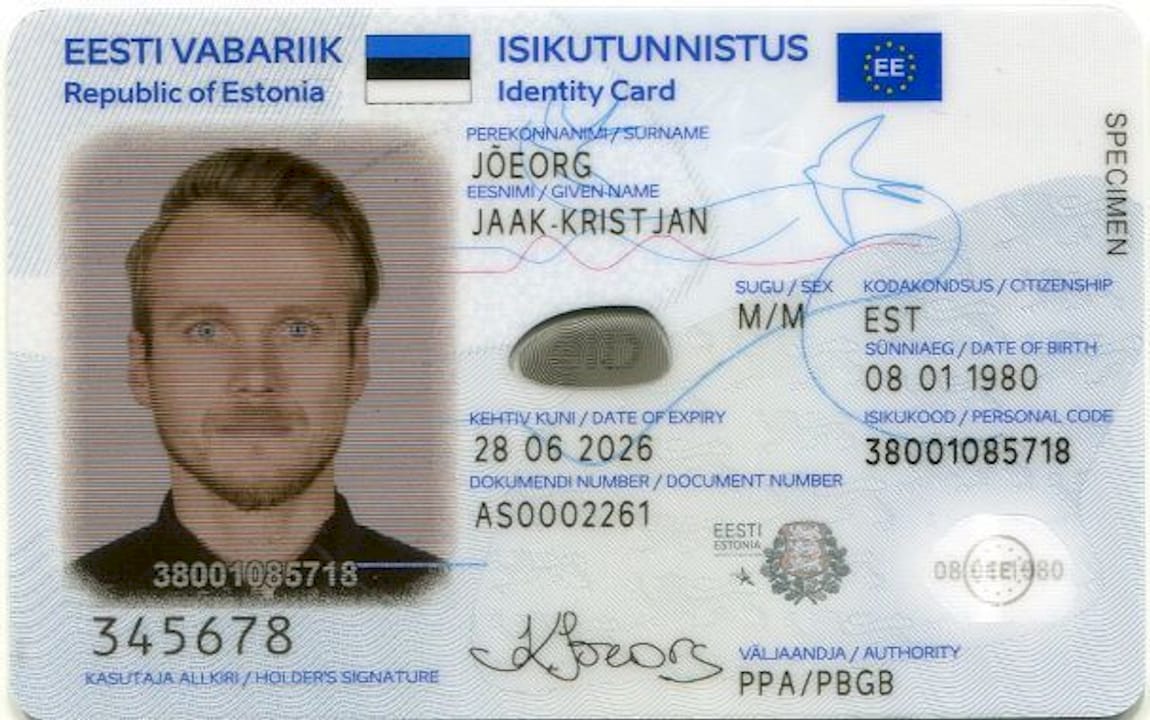
A second nationality is the legal status of holding citizenship in a country other than the one you were born into, granting you full rights and obligations in both nations. The formal term for this status is dual citizenship or dual nationality, defined as recognition by two or more countries of the same person simultaneously. No uniform international law governs this status. Each country sets its own rules, which means your eligibility, rights, and obligations depend entirely on the specific laws of the countries involved. For families with European ancestry, this distinction matters enormously, because it determines whether you can claim a passport, residency rights, or the ability to work abroad without restriction.
What is a second nationality, and how is it defined legally?
A second nationality means you are a full legal citizen of two countries at the same time. The two most common paths to this status are citizenship by birth (jus soli, meaning “right of the soil”) and citizenship by descent (jus sanguinis, meaning “right of blood”). A third path is naturalization, where you apply for citizenship after meeting residency and other requirements.
The legal foundation matters because it shapes what rights you actually receive. A person born in the United States to Italian parents, for example, may claim Italian citizenship through jus sanguinis without ever living in Italy. That claim gives them a second passport, EU residency rights, and the ability to work across 27 European Union member states.
Governments do not automatically notify each other when one of their citizens acquires another nationality. You carry both citizenships independently, and each country applies its own laws to you when you are within its borders.

What is the difference between dual citizenship and second citizenship?
These two terms sound identical but carry a legal distinction worth understanding before you apply for anything.
Dual citizenship requires mutual recognition by both countries. Both governments acknowledge that you hold their nationality simultaneously. The United States and Canada, for instance, both permit dual nationality, so an American who naturalizes as Canadian holds recognized dual citizenship in both directions.
Second citizenship describes a situation where you hold citizenship in a second country, but your home country does not recognize that status. If your home country prohibits multiple nationalities, you technically hold a second citizenship without your government’s acknowledgment of it. That gap creates real legal exposure.
| Feature | Dual citizenship | Second citizenship |
|---|---|---|
| Home country recognition | Yes, both countries recognize the status | No, home country may not acknowledge it |
| Legal standing in both countries | Full rights in both | Full rights in new country only |
| Diplomatic protection | May be limited due to competing claims | Home country may not assist abroad |
| Common examples | U.S., Canada, Italy, Ireland | Countries that prohibit dual nationality |
| Risk level | Lower, when both countries permit it | Higher, if home country penalizes it |
Pro Tip: Before applying for a second nationality, confirm whether your home country requires you to renounce your original citizenship. Countries like Austria, India, and Japan do not recognize dual nationality, which means naturalizing elsewhere could cost you your original passport.
What are the main benefits and potential drawbacks of a second nationality?
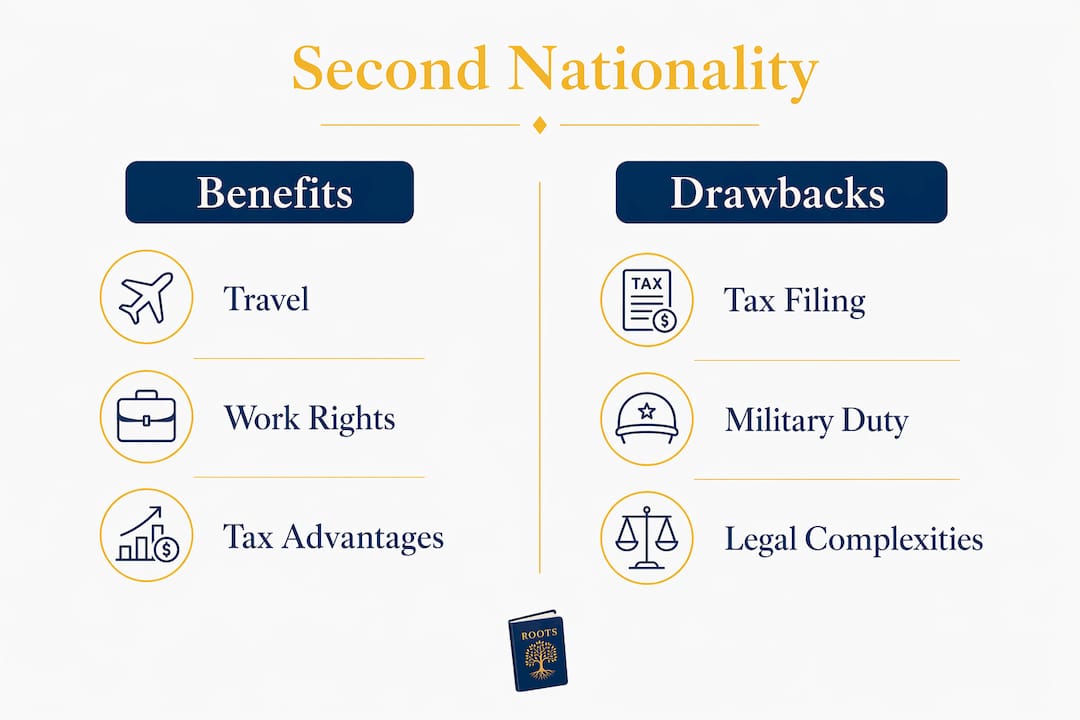
The benefits of second nationality are concrete and wide-ranging. Second citizenship offers enhanced passport power, expanded work and residency rights, and access to social and political systems in the new country. That combination is why so many families with European roots are actively pursuing ancestral claims right now.
Key benefits
- Visa-free travel: A second passport from an EU member state opens borders across Europe and often dozens of additional countries without a visa.
- Right to work and live abroad: You can accept employment, open a business, or purchase property in the second country without a work permit or residency visa.
- Voting rights: Full citizens can participate in elections and political processes in the new country.
- Education access: Many countries offer citizens reduced or subsidized tuition at public universities, a significant financial advantage for families with children.
- Consular protection: You gain access to that country’s diplomatic services when traveling in third countries.
Potential drawbacks
- Tax complexity: The United States applies citizenship-based taxation regardless of where you live, which can create double tax obligations for Americans with a second nationality.
- Military service: Some countries require citizens to complete mandatory military service, even those who acquired citizenship by descent.
- Legal conflicts: Laws in your two countries may conflict, creating complications in areas like inheritance, property rights, or family law.
- Consular protection limits: The U.S. Department of State warns that dual nationals may face limited diplomatic assistance when traveling in their second country of citizenship.
Pro Tip: Cross-border tax planning is not optional if you hold two citizenships. Consult a tax advisor who specializes in international taxation before you finalize any application, particularly if you are a U.S. citizen.
Applicants consistently underestimate these complications. Military service obligations, tax filing requirements, and the risk of losing your original citizenship are real factors that deserve serious research before you commit to an application.
How can ancestry influence eligibility for a second nationality?
Ancestry is the most accessible path to a second nationality for most Americans and Canadians. Citizenship by descent, governed by jus sanguinis law, allows you to claim nationality through a parent, grandparent, or in some cases a great-grandparent who held citizenship in another country. Eligibility depends on parent or grandparent citizenship per the specific laws of the target country, and requires documentation proving your lineage.
The practical steps to assess your eligibility follow a clear sequence:
- Identify the ancestor: Determine which parent or grandparent held citizenship in the target country and when they emigrated.
- Confirm the country’s descent rules: Each country sets its own generational limits. Italy, Ireland, and Poland each have different cutoff rules for how far back the qualifying ancestor can be.
- Gather vital records: Birth certificates, marriage certificates, naturalization records, and death certificates form the core of any ancestry-based application. Originals or certified translations are typically required.
- Check for disqualifying events: Some countries revoke descent eligibility if the ancestor naturalized as a citizen of another country before a certain date. Italian law, for example, has specific rules about naturalization dates that can affect your claim.
- Submit to the correct consulate or government authority: Applications go through the consulate of the target country in your country of residence, or directly to that country’s civil registry office.
- Prepare for processing timelines: Ancestry-based applications can take months to years depending on the country and consulate backlog. Italy and Ireland currently have some of the longest wait times.
Citizenship by descent programs vary significantly in their documentation standards and eligibility timelines. A citizenship eligibility assessment from a qualified consulting firm can identify your strongest path before you invest time and money in the wrong direction.
Roots Recovered, LLC specializes in exactly this process. The firm guides families through the documentation requirements, consulate procedures, and legal nuances specific to their ancestry, reducing the risk of application errors that cause delays or denials.
What legal considerations should you keep in mind?
Legal obligations follow citizenship, not just residence. When you hold two nationalities, both countries can make legal claims on you simultaneously, and those claims do not always align neatly.
- Passport use: Most dual citizens must use the passport of the country they are entering. Entering Italy on your U.S. passport when you hold Italian citizenship, for instance, may create complications with Italian authorities.
- Local law applies fully: While you are physically present in one of your countries of citizenship, that country’s laws govern you completely. Your other country’s embassy cannot intervene in legal matters there.
- Consular protection gaps: The U.S. Department of State notes that competing claims from both countries can limit the diplomatic assistance available to dual nationals in distress abroad.
- Renunciation requirements: Checking whether your home country rejects dual nationality is a prerequisite step. Some countries demand renunciation of original citizenship before granting naturalization.
- Military obligations: If the second country requires military service, that obligation may apply to you as a citizen by descent, even if you have never lived there.
- Tax filing: U.S. citizens must file federal tax returns regardless of residence. Holding a second nationality does not eliminate that obligation, and it may add reporting requirements under FBAR and FATCA rules.
Consulting both a nationality law attorney and an international tax advisor before submitting any application is the most reliable way to avoid costly surprises. The legal landscape differs country by country, and general advice rarely covers the specific combination of nationalities you hold.
Key Takeaways
A second nationality gives you full citizenship rights in two countries, but the legal, tax, and diplomatic implications vary significantly depending on which countries are involved and whether both recognize the status.
| Point | Details |
|---|---|
| Definition of second nationality | Holding citizenship in two countries simultaneously, formally called dual citizenship or dual nationality. |
| Dual vs. second citizenship | Dual citizenship requires mutual recognition; second citizenship can exist without home country acknowledgment. |
| Core benefits | Visa-free travel, work and residency rights, voting, and access to education in the second country. |
| Ancestry eligibility | Citizenship by descent through a parent or grandparent is the most accessible path for Americans and Canadians. |
| Legal obligations | Tax filing, passport use rules, and military service duties apply in both countries and require expert review. |
How Roots Recovered, LLC helps you claim ancestral citizenship
Roots Recovered, LLC works exclusively with individuals and families pursuing citizenship by descent. The firm handles the full process from initial eligibility review through consulate submission, with established relationships with European consulates that reduce processing friction. If your family tree includes Italian, Irish, Polish, or other European roots, a professional assessment can determine whether a valid claim exists before you spend months gathering documents. Roots Recovered, LLC offers transparent pricing and personalized guidance at every stage. Start with a citizenship eligibility assessment to find out whether your ancestry qualifies you for a second passport.
FAQ
What is dual nationality in simple terms?
Dual nationality means you are a full legal citizen of two countries at the same time, with rights and obligations in both. Each country recognizes your citizenship independently under its own laws.
Which countries allow dual citizenship?
The United States, Canada, Italy, Ireland, and many other nations permit dual nationality. Countries like Austria, India, and Japan do not, and may require you to renounce your original citizenship before naturalizing.
Can I get a second nationality through my grandparents?
Yes, many countries grant citizenship by descent through a grandparent under jus sanguinis law. Eligibility depends on the specific country’s generational rules and whether the grandparent held citizenship at the relevant time.
How long does it take to obtain a second nationality by descent?
Timelines vary widely by country and consulate. Some applications resolve in under a year, while Italian and Irish ancestry claims can take several years due to high application volumes and document verification requirements.
Do I need a lawyer to apply for citizenship by descent?
A lawyer is not always legally required, but a specialized consulting firm like Roots Recovered, LLC significantly reduces the risk of errors, missing documents, and consulate rejections that can set your application back by years.